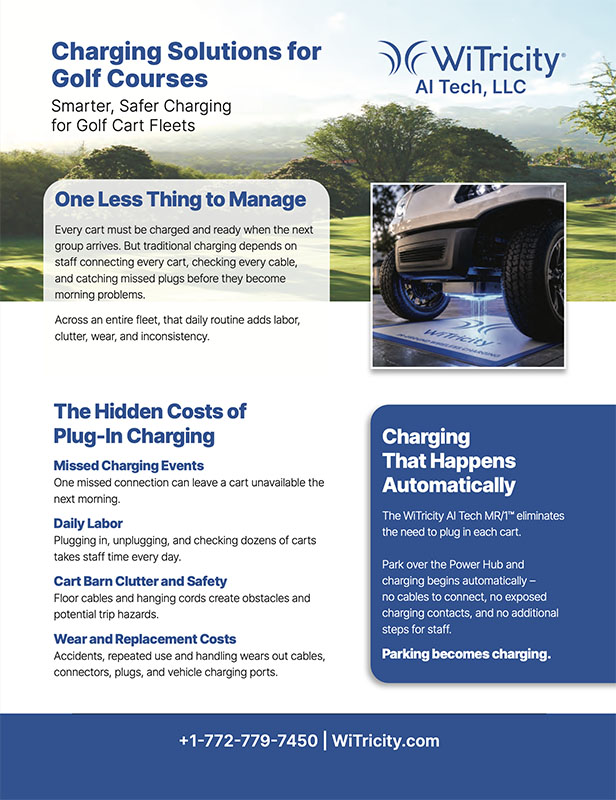


Managing a fleet of golf carts is a daily operational challenge for most courses. From ensuring every cart is charged and ready, to managing cables in crowded cart barns, charging is often one of the most overlooked and inefficient parts of the operation, often relying on manual processes that introduce inconsistency and risk.
Wireless charging offers a different approach: one that fits into your existing workflow instead of adding to it.
For many courses, charging looks something like this:
These issues create real challenges:
Inconsistent Charging
It only takes one missed plug to create a problem the next morning. Whether it’s staff oversight or a rushed close, carts aren’t always ready when needed.
Labor and Time Overhead
Managing charging isn’t automatic — it requires staff time. Plugging in dozens of carts, checking connections, and troubleshooting adds up quickly.
Cart Barn Safety Risks
Charging cables create cluttered walkways and potential trip hazards, while overhead systems can introduce additional risks from hanging cords in tight, high-traffic areas. In a busy cart barn, this can increase the likelihood of accidents and potential liability.
Battery Safety and Insurance Concerns
As more courses transition to lithium-ion fleets, concerns around battery safety and fire risk are becoming more common, including increased scrutiny from insurance providers. Wireless charging systems that integrate with battery management systems can help monitor charging behavior and reduce risk, supporting safer long-term operation.
Unlike traditional plug-in charging systems, wireless charging eliminates exposed charging contacts and removes the possibility of electrical shock associated with handling charging connectors during normal operation.
Wear and Maintenance
Repeated plugging and unplugging leads to wear on connectors, cables, and charging ports, increasing maintenance and replacement costs over time. Charging cables and connectors are consumable components that require ongoing maintenance and eventual replacement, creating costs that can add up significantly across an entire fleet.
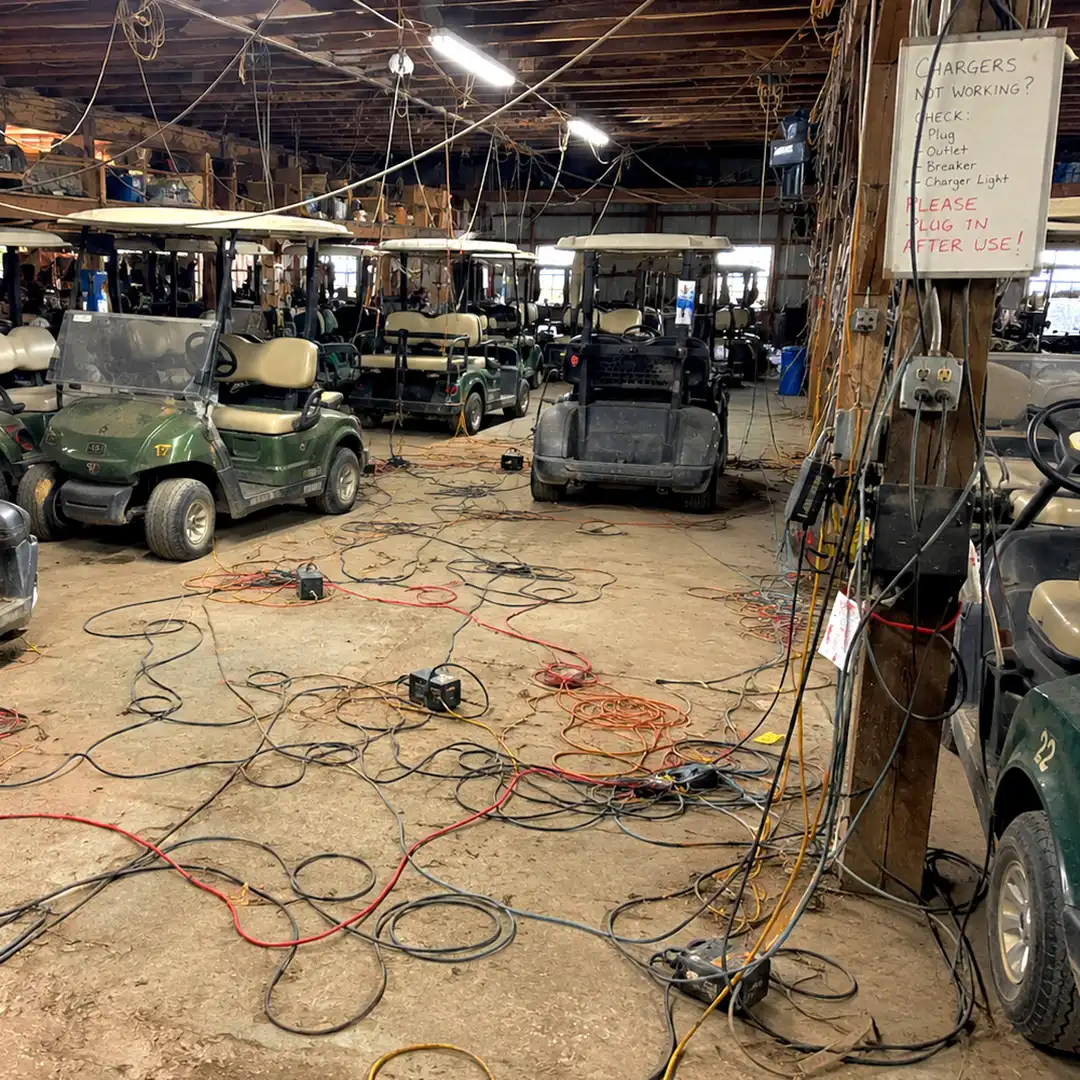
Plug-in charging works, but over time, cable wear, connector failures, and inconsistent charging increases maintenance costs and reduces overall fleet availability.
In short:
Charging becomes a drain on course operators that depends on humans doing the right thing every time rather than a process that runs automatically.
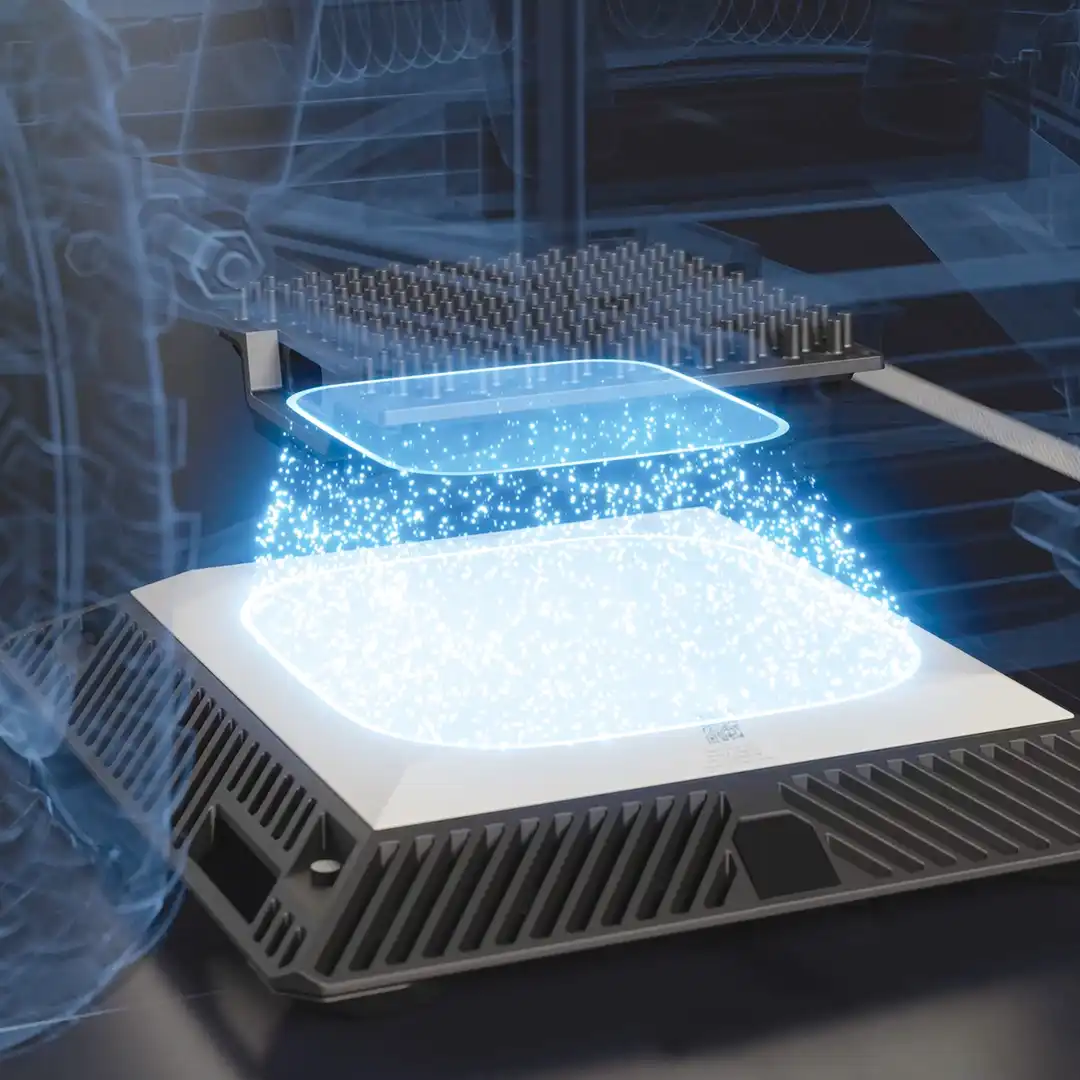
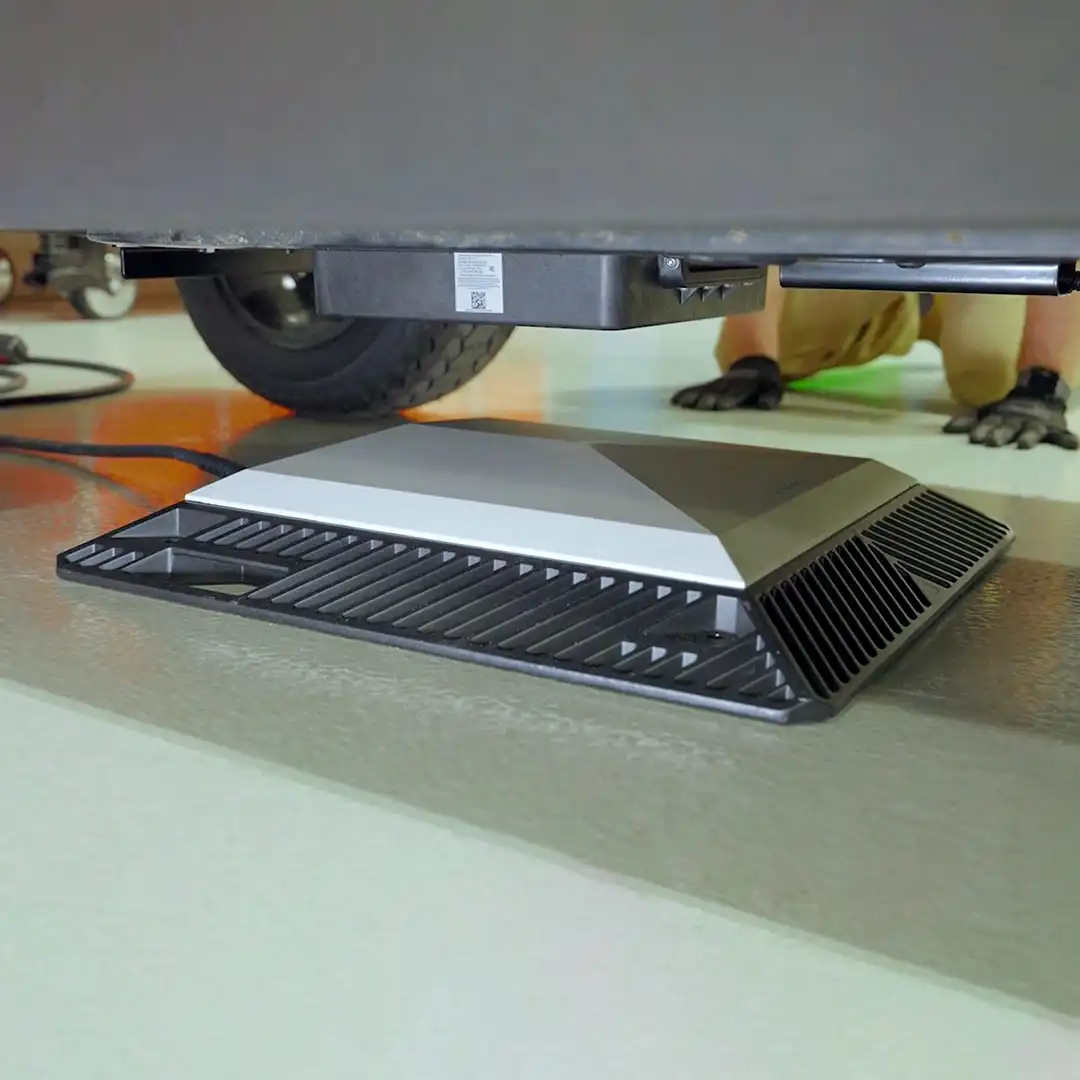
WiTricity’s wireless charging system for golf carts is designed to eliminate the need for plugs entirely.
With the MR/1 wireless charging system:
There’s nothing new for staff to remember. Charging simply becomes part of parking.
What This Changes for Golf Course Operations
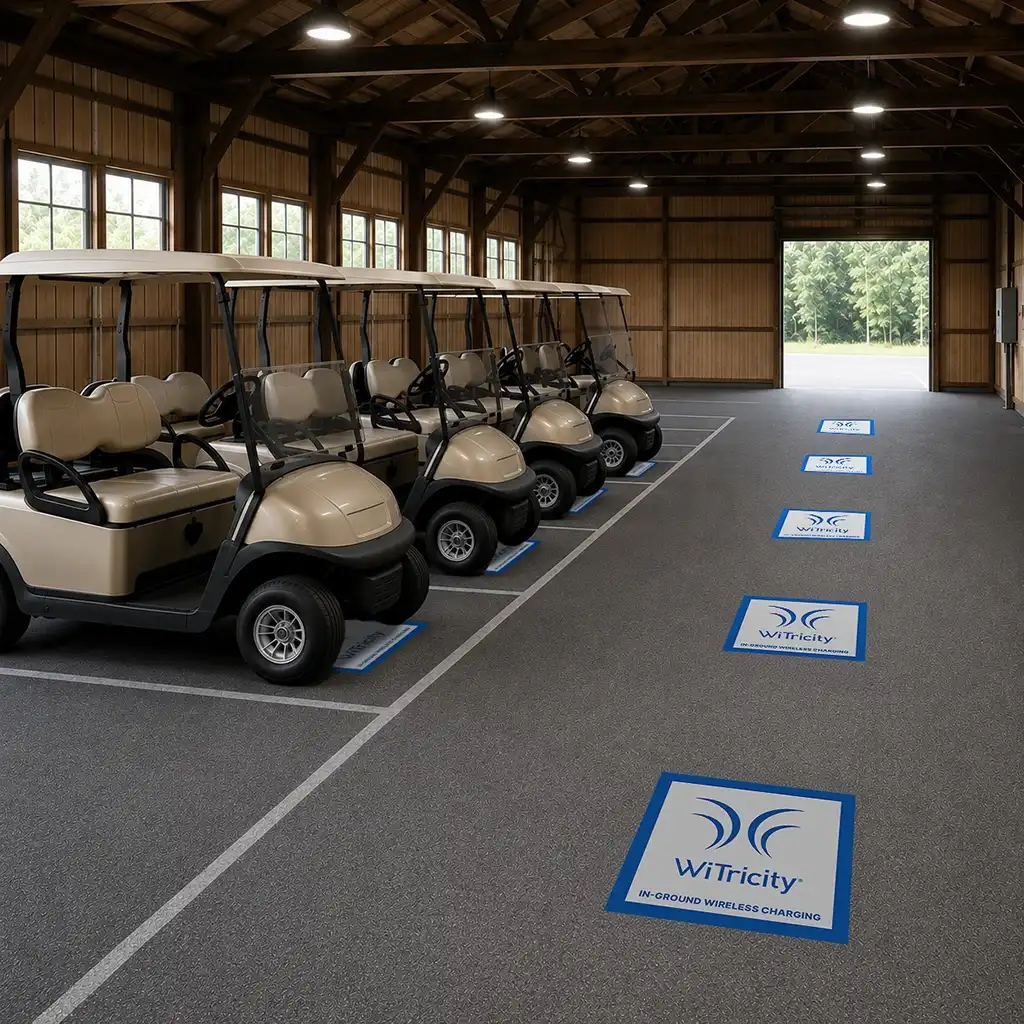
Golf courses operate in structured, repeatable patterns:
Wireless charging is particularly well-suited to these conditions, where vehicles naturally return to predictable positions.
The MR/1 system is designed for:
It supports both lead-acid and lithium battery systems, making it compatible with a wide range of existing and new carts.
Charging shouldn’t require daily oversight or create operational friction.
Wireless charging allows courses to:
Estimate charging performance, operational savings, and the potential value of eliminating cables and connectors from your charging routine.
If you’re evaluating ways to improve how your fleet is managed, we’re happy to walk through how wireless charging could fit into your operation.